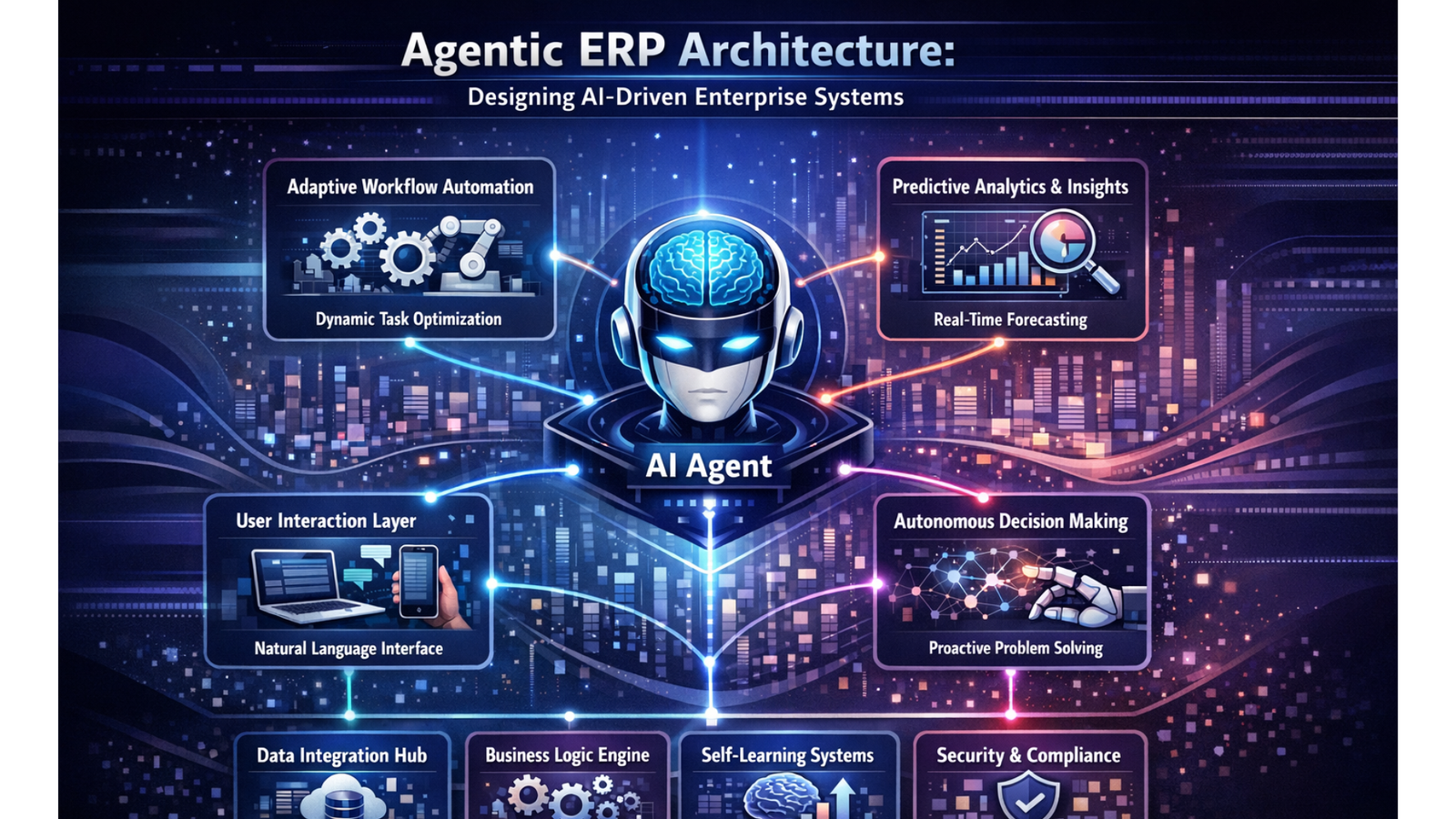
Agentic ERP Architecture: Designing AI-Driven Enterprise Systems
Enterprise Resource Planning systems are undergoing a major transformation. Organizations are moving beyond traditional automation and adopting intelligent systems that can monitor, analyze, and execute business processes.
This shift is driven by the emergence of agentic ERP environments, where AI agents actively participate in enterprise operations.
To support this evolution, organizations need a well defined agentic ERP architecture. Without a structured approach, AI driven systems can become fragmented and difficult to manage.
A strong architecture ensures that ERP, AI, workflows, integrations, and governance operate together seamlessly.
Why Agentic ERP Architecture Matters
Many organizations introduce AI capabilities into ERP systems without redesigning the underlying architecture. This often leads to isolated use cases that do not scale across the enterprise.
A structured AI enterprise architecture provides:
• consistency across systems
• scalability for future automation
• clear separation of responsibilities
• better governance and control
It allows organizations to move from isolated automation efforts to a unified ERP AI framework.
The Core Layers of Agentic ERP Architecture
Designing an effective architecture requires understanding the key layers that support intelligent ERP systems.
Each layer plays a specific role in enabling automation, intelligence, and control.
ERP Core: The Foundation of Enterprise Systems
The ERP core remains the central system for managing business operations.
It includes modules such as:
• finance and accounting
• procurement and supply chain
• inventory and warehouse management
• order management
The ERP core is responsible for:
• storing transactional data
• enforcing business processes
• maintaining financial accuracy
• supporting compliance and reporting
In an agentic ERP architecture, the ERP core provides the structured data that AI systems rely on.
However, it is no longer the only layer responsible for decision making.
AI Orchestration Layer: Enabling Intelligent Decision Making
The AI orchestration layer introduces intelligence into the ERP environment.
This layer includes:
• machine learning models
• AI agents
• decision engines
• analytics tools
The role of this layer is to:
• analyze data across systems
• identify patterns and anomalies
• recommend or execute actions
• coordinate AI driven workflows
AI agents operate within this layer, interacting with ERP data and external systems.
This is where AI enterprise architecture becomes operational.
Instead of simply providing insights, the system can initiate actions based on data analysis.
Workflow Engine: Managing Process Execution
The workflow engine is responsible for executing business processes.
It defines how tasks move across systems and users.
Key functions of the workflow engine include:
• process orchestration
• task sequencing
• approval routing
• exception handling
In an ERP AI framework, the workflow engine works closely with the AI orchestration layer.
For example:
An AI agent may identify a discrepancy in financial data. The workflow engine then routes the issue for approval or triggers corrective actions.
This combination ensures that automation follows structured processes.
Integration Layer: Connecting Enterprise Systems
Modern enterprises operate across multiple systems.
ERP platforms must connect with:
• CRM systems
• e-commerce platforms
• logistics systems
• document management tools
• analytics platforms
The integration layer enables these connections.
It includes:
• APIs
• integration platforms
• data synchronization mechanisms
A strong integration layer ensures that:
• data flows seamlessly across systems
• AI agents have access to complete information
• workflows can span multiple applications
In an agentic ERP architecture, integration is critical.
Without it, AI systems operate with limited context.
Governance Controls: Ensuring Compliance and Trust
As ERP systems become more autonomous, governance becomes increasingly important.
Governance controls define how systems operate within organizational policies.
Key governance elements include:
• decision boundaries for AI agents
• approval thresholds for transactions
• audit trails for system activities
• access controls for users and systems
Governance ensures that automation remains aligned with business objectives and regulatory requirements.
It also builds trust in AI driven systems.
In a well designed AI enterprise architecture, governance is integrated into every layer.
How These Layers Work Together
The true value of an agentic ERP architecture lies in how these layers interact.
Consider a supply chain scenario.
The ERP core stores inventory and order data. The AI orchestration layer analyzes demand patterns and identifies potential shortages. The workflow engine initiates procurement processes. The integration layer connects with supplier systems. Governance controls ensure that actions follow company policies.
Each layer contributes to a coordinated outcome.
This integrated approach allows organizations to move from reactive operations to proactive management.
Benefits of a Structured ERP AI Framework
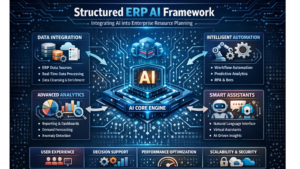
Organizations that adopt a well designed architecture can achieve several benefits.
Scalability
A modular architecture allows organizations to expand AI capabilities without disrupting existing systems.
Flexibility
Different components can be updated or replaced as technology evolves.
Improved Efficiency
Automated workflows reduce manual effort and improve process speed.
Better Decision Making
AI driven insights support more informed operational decisions.
Stronger Governance
Integrated controls ensure compliance and accountability.
These benefits highlight the importance of a structured approach to ERP transformation.
Common Challenges in Designing Agentic ERP Architecture
Despite its advantages, designing an effective architecture is not without challenges.
Organizations often face issues such as:
• fragmented system landscapes
• inconsistent data across applications
• lack of integration between systems
• unclear ownership of processes
• insufficient governance frameworks
Addressing these challenges requires careful planning and expertise.
Building the Right Architecture Strategy
Organizations should take a step by step approach to designing their ERP AI framework.
Key steps include:
Assess Current Systems
Understand the existing ERP environment and identify gaps.
Define Business Objectives
Align architecture design with operational goals.
Establish Integration Standards
Ensure consistent data flow across systems.
Implement Governance Frameworks
Define policies and controls for automation.
Introduce AI Gradually
Start with targeted use cases and expand over time.
This approach helps organizations build a sustainable architecture.
The Future of Agentic ERP Architecture
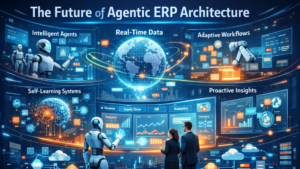
As technology continues to evolve, ERP architectures will become more advanced.
Future trends may include:
• increased use of AI agents across business functions
• deeper integration between systems
• more advanced workflow orchestration
• enhanced real time data processing
These developments will further strengthen the role of ERP as an intelligent enterprise platform.
Conclusion
The transition to agentic ERP requires more than adding AI capabilities. It requires a well designed architecture that brings together ERP systems, AI intelligence, workflows, integrations, and governance.
A strong agentic ERP architecture enables organizations to build intelligent, scalable, and controlled enterprise systems.
By adopting a structured AI enterprise architecture, businesses can move from isolated automation efforts to fully integrated operational environments.
The future of ERP lies in systems that not only manage data but also drive decisions and actions.
Organizations that invest in the right architecture today will be better prepared for the next phase of enterprise transformation.