
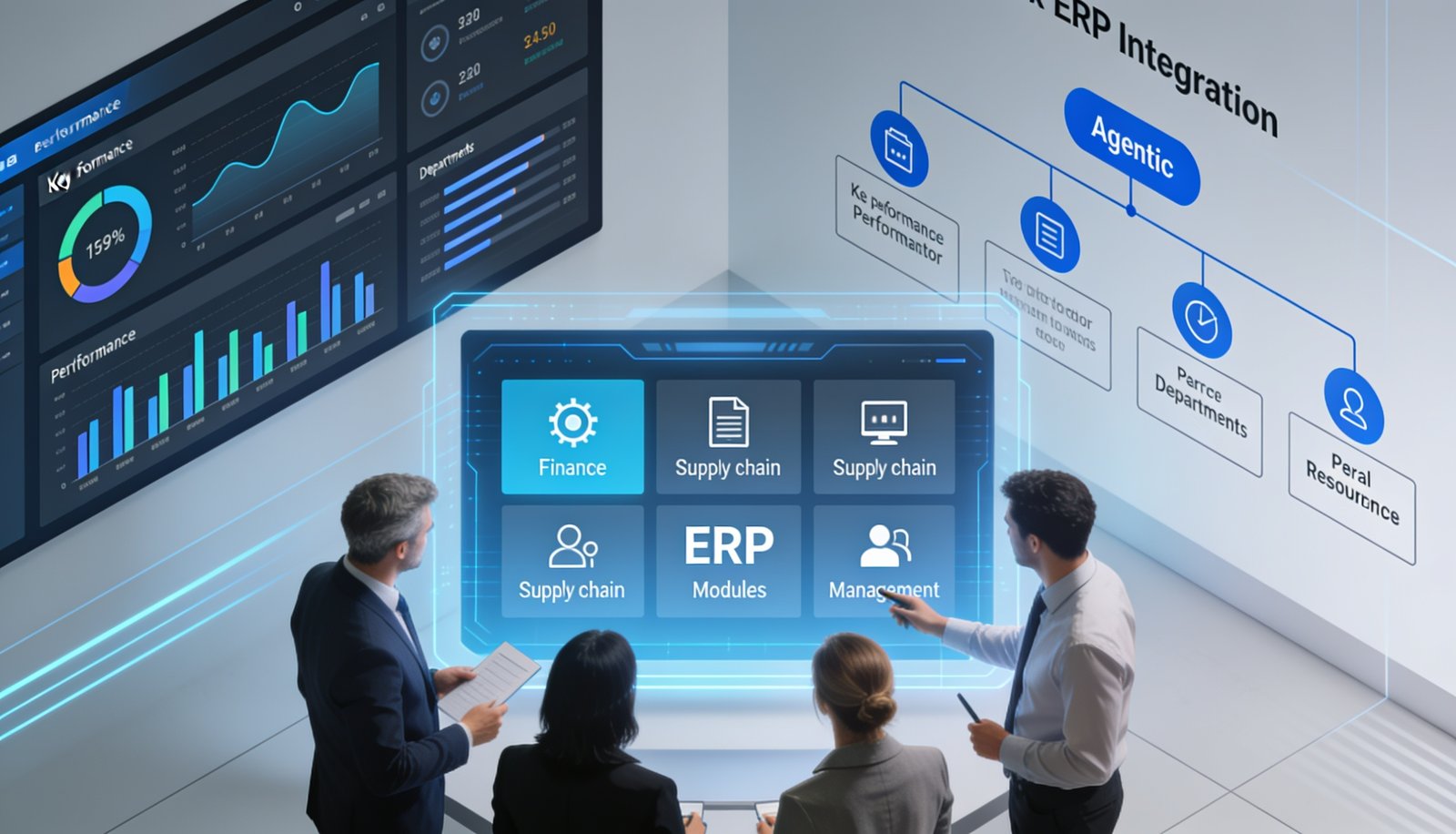

ERP transformation is a major decision for any organization. When that transformation involves Agentic AI capabilities, the decision becomes even more strategic.
Agentic ERP combines enterprise resource planning with AI-driven automation, intelligent decision-making, and autonomous process execution. It allows organizations to move beyond traditional ERP systems that simply record transactions and generate reports. Instead, Agentic ERP helps businesses monitor operations, identify exceptions, recommend actions, and automate routine decisions within defined business rules.
However, adopting Agentic ERP requires investment. Leadership teams need a clear business case that explains why the investment is necessary, what value it will create, and how the organization will measure success.
A strong business case should not focus only on cost savings. While cost reduction and efficiency gains are important, the value of Agentic ERP is much broader. It also includes improved decision-making, reduced operational risk, better scalability, stronger agility, and long-term competitive advantage.
At DAX Software Solutions, we help organizations build practical and outcome-driven business cases for Agentic ERP. In this blog, we will explain the key elements that should be included when presenting Agentic ERP to leadership.
Why a Business Case for Agentic ERP Matters
Leadership teams need more than a technology explanation. They need to understand how Agentic ERP supports business goals.
A well-structured business case helps answer important questions such as:
- What business problems are we trying to solve?
- Which processes can be improved through AI and automation?
- What measurable benefits can the organization expect?
- How will the investment reduce risk?
- What is the expected return on investment?
- How will Agentic ERP support long-term growth?
- What governance and controls will be required?
When these questions are answered clearly, leadership can evaluate Agentic ERP as a strategic business investment rather than only a technology upgrade.
Key Elements of a Strong Business Case for Agentic ERP
To persuade leadership, the business case must connect technology capabilities with business outcomes. The following elements should be included.
1. Cost Savings
Cost savings are usually one of the first areas leadership will evaluate. Agentic ERP can help reduce costs by automating repetitive work, improving accuracy, and reducing dependency on outdated systems.
Reduced Operational Costs
Many business processes still require manual effort. Finance reconciliations, procurement approvals, inventory updates, reporting, and exception handling often consume significant time.
Agentic ERP can automate many of these routine activities. This reduces manual workload and allows teams to focus on more strategic responsibilities.
For example, AI agents can help:
- Automate financial reconciliations
- Support procurement approvals
- Monitor inventory levels
- Trigger routine workflow actions
- Identify process exceptions
- Reduce manual follow-ups
This can lead to meaningful savings in time, effort, and operating cost.
Lower Error Rates
Manual processes increase the risk of errors. Mistakes in finance, procurement, inventory, or reporting can create rework, delays, and compliance issues.
Agentic ERP helps reduce these errors by using AI-driven validation and automated checks. It can identify anomalies, flag exceptions, and support more accurate execution.
This improves process reliability and reduces the cost of correcting mistakes.
Reduced Legacy System Costs
Many organizations continue to operate with disconnected or outdated ERP environments. These systems often require high maintenance, manual workarounds, and frequent technical support.
A modern Agentic ERP environment can reduce the burden of maintaining legacy processes. It creates a more integrated and intelligent operating model, which can lower support and maintenance costs over time.
2. Efficiency Gains
Efficiency is another major component of the business case. Agentic ERP improves efficiency by helping teams complete work faster, with fewer delays and less manual intervention.
Faster Decision-Making
Traditional ERP systems often depend on users to review reports, identify issues, and take action. This can slow down decision-making.
Agentic ERP allows AI agents to continuously monitor business data and support faster decisions. These agents can detect risks, identify opportunities, and recommend the next action in near real-time.
This is especially useful in areas such as:
- Procurement
- Inventory management
- Finance operations
- Supply chain planning
- Customer service
- Compliance monitoring
Faster decisions can improve responsiveness across the organization.
Streamlined Operations
Agentic ERP helps remove bottlenecks from everyday processes. By automating routine decisions and workflow steps, it allows employees to focus on higher-value work.
For example:
- Finance teams can spend less time on manual matching and reconciliation.
- Supply chain teams can focus on exceptions instead of routine tracking.
- Customer service teams can respond faster with better system-driven insights.
- Managers can review meaningful alerts instead of scanning multiple reports.
This improves productivity across departments.
Optimized Resource Allocation
Agentic ERP can help organizations use resources more effectively. AI can analyze patterns across people, inventory, capital, and workloads to recommend better allocation.
This helps reduce waste and improve output.
For example, AI agents can help:
- Allocate inventory based on demand patterns
- Adjust procurement plans
- Prioritize urgent workflows
- Balance workloads across teams
- Identify underused resources
Better resource allocation directly supports improved operational performance.
3. Risk Reduction
Risk reduction is an important part of any ERP transformation business case. Traditional ERP environments often depend heavily on manual checks and delayed reviews. This can create gaps in compliance, reporting, and operational control.
Agentic ERP can reduce risk by continuously monitoring business activity and identifying issues earlier.
Proactive Risk Monitoring
AI agents can analyze business data to detect potential risks before they become major problems.
These risks may include:
- Supply chain disruptions
- Financial anomalies
- Compliance gaps
- Unusual transaction patterns
- Inventory shortages
- Delayed approvals
- Process deviations
By identifying risks early, organizations can act before the impact becomes serious.
Enhanced Compliance Management
Compliance requirements continue to increase across industries. Manual compliance tracking can be time-consuming and prone to oversight.
Agentic ERP can support compliance by monitoring process activity, identifying deviations, and helping ensure that actions follow defined rules and controls.
This reduces the risk of missed requirements, penalties, or audit issues.
Audit-Ready Systems
A strong ERP system should provide traceability. Agentic ERP can help maintain clear audit trails by recording decisions, approvals, exceptions, and system-driven actions.
This makes it easier for organizations to demonstrate control, transparency, and accountability.
Audit-ready processes are especially important in finance, procurement, supply chain, and regulated industries.
4. Improved Decision-Making
One of the strongest arguments for Agentic ERP is better decision-making. Traditional ERP systems provide data, but users still need to interpret that data and decide what to do.
Agentic ERP improves this model by adding AI-driven insight and recommendation capabilities.
Continuous Data Analysis
AI agents can analyze operational data continuously. This means decisions can be based on current information rather than delayed reports or periodic reviews.
Continuous data analysis helps businesses respond faster to changing conditions.
Data-Driven Decisions
Agentic ERP can help identify patterns that may not be easy for users to detect manually. It can uncover trends, anomalies, risks, and opportunities across business functions.
This supports better decisions in areas such as:
- Finance
- Supply chain
- Procurement
- Sales operations
- Customer service
- Production planning
- Inventory management
Data-driven decision-making improves accuracy and reduces dependency on assumptions.
Faster Strategic Adjustments
Business conditions change quickly. Organizations need to adjust strategies based on market conditions, customer behavior, cost changes, and operational performance.
Agentic ERP can provide real-time visibility into key performance indicators. This helps leadership make timely adjustments and respond with greater confidence.
Additional Considerations for a Compelling Business Case
The business case should also show how Agentic ERP supports long-term growth. Beyond cost savings and efficiency, leadership should understand the strategic value of the investment.
5. Scalability
As organizations grow, their systems must handle higher transaction volumes, more users, more locations, and more complex workflows.
Agentic ERP supports scalability by automating processes that would otherwise require additional manual effort.
It can help businesses:
- Manage increased transaction volumes
- Expand into new markets or regions
- Standardize processes across locations
- Reduce the need for manual supervision
- Maintain efficiency during growth
- Handle larger data volumes more effectively
Scalability is an important argument for leadership because it connects ERP investment with future business expansion.
6. Agility
Agility is critical in a rapidly changing business environment. Organizations need to respond quickly to customer needs, market shifts, supply chain disruptions, and internal changes.
Agentic ERP improves agility by enabling faster process adjustments and more responsive decision-making.
It can help organizations:
- Adapt to changing demand
- Respond faster to supply chain issues
- Adjust workflows based on business conditions
- Improve customer service responsiveness
- Support faster internal approvals
- Enable innovation by reducing repetitive work
When routine work becomes automated, teams have more time to focus on problem-solving, planning, and innovation.
7. Competitive Advantage
Agentic ERP is not only an operational improvement. It can become a source of competitive advantage.
Organizations that use AI-powered ERP systems can operate faster, make better decisions, and reduce inefficiencies that slow down competitors.
Agentic ERP can help businesses:
- Respond faster to market changes
- Improve customer experience
- Reduce operational delays
- Improve process consistency
- Innovate more quickly
- Make better use of enterprise data
In a competitive market, speed and intelligence can create a meaningful advantage.
How to Present the Business Case to Leadership
A business case should be clear, measurable, and aligned with business strategy. Leadership teams need to see both the financial and operational value.
A strong presentation should include:
- Current operational challenges
- Business processes that need improvement
- Expected benefits from Agentic ERP
- Estimated cost savings
- Efficiency improvement opportunities
- Risk reduction benefits
- Implementation roadmap
- Governance framework
- Budget estimate
- Timeline
- Success metrics
The goal is to show that Agentic ERP is not simply a software investment. It is a business transformation initiative designed to improve performance, control, and scalability.
Suggested Metrics to Include in the Business Case
To make the case stronger, organizations should define measurable success indicators.
Useful metrics may include:
- Reduction in manual processing time
- Reduction in process errors
- Improvement in approval cycle time
- Reduction in reconciliation effort
- Faster financial close timelines
- Reduction in support and maintenance costs
- Improvement in inventory accuracy
- Faster response to exceptions
- Reduction in compliance gaps
- Improved productivity per employee
These metrics help leadership understand how the success of Agentic ERP will be measured after implementation.
At DAX Software Solutions: Building Your Business Case for Agentic ERP
At DAX Software Solutions, we help organizations develop practical business cases for Agentic ERP adoption.
We work with stakeholders to understand current challenges, identify improvement opportunities, and connect ERP transformation with measurable business outcomes.
Our approach includes:
- Identifying key business goals and operational pain points
- Assessing current ERP systems and process maturity
- Identifying areas where AI-driven automation can create value
- Estimating ROI through cost savings, efficiency gains, and risk reduction
- Creating an implementation roadmap
- Defining governance, controls, and compliance requirements
- Aligning the business case with leadership priorities
By building a clear and structured business case, organizations can make better decisions about ERP transformation and ensure that the investment supports long-term business objectives.
Conclusion
Building a business case for Agentic ERP requires more than highlighting technology features. It requires a clear explanation of business value.
A strong business case should show how Agentic ERP can reduce costs, improve efficiency, lower risk, support better decision-making, and create long-term competitive advantage.
It should also explain how the organization will measure success and manage implementation responsibly.
Agentic ERP gives businesses the opportunity to move beyond traditional ERP systems and build more intelligent, responsive, and scalable operations.
At DAX Software Solutions, we help organizations craft compelling business cases for ERP transformation, ensuring that investments in Agentic ERP are aligned with strategic goals and measurable outcomes.
Transformation starts with clear justification.
Contact us: https://daxsws.com/contact-us