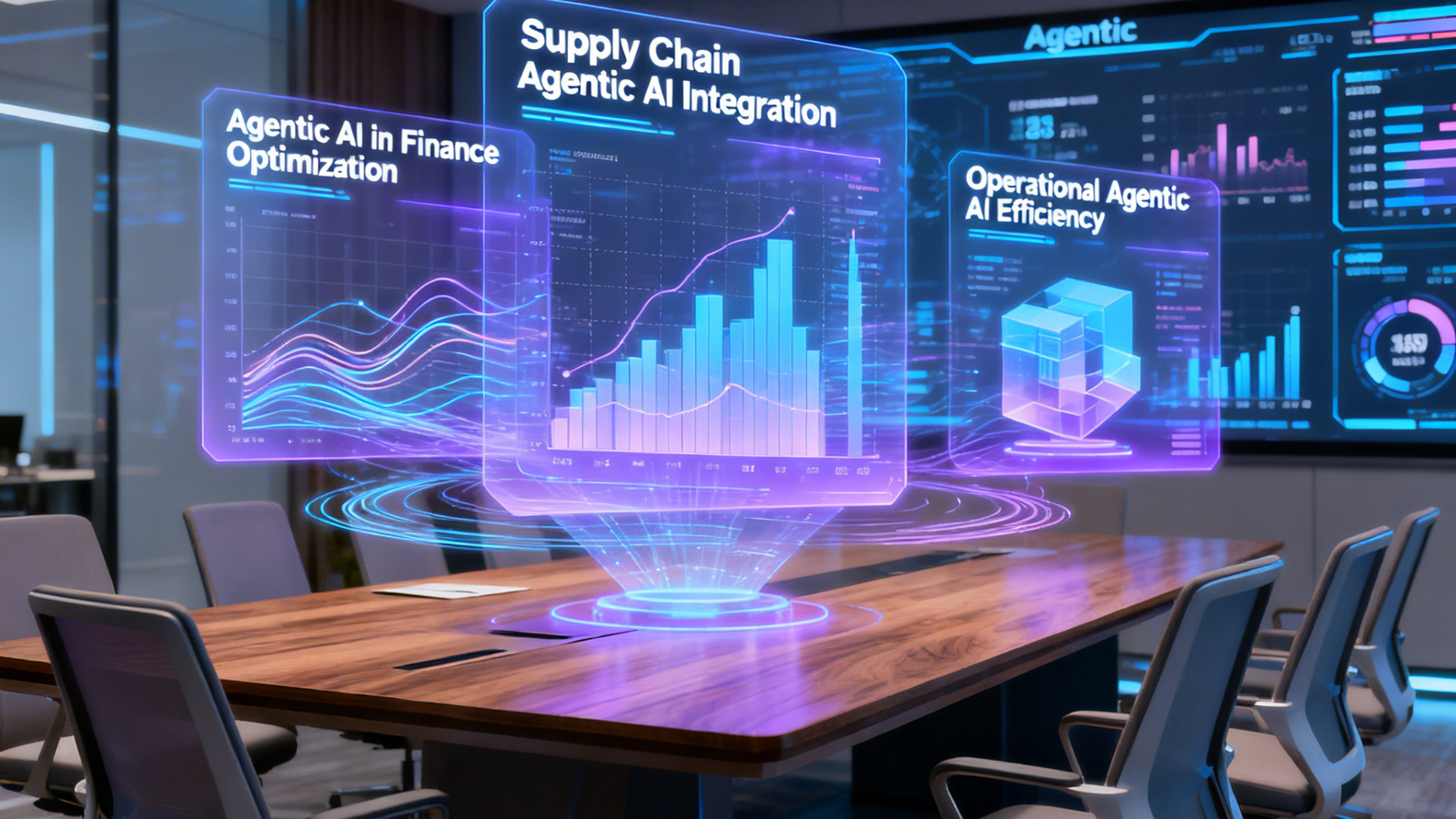
Agentic AI Use Cases Across Finance, Supply Chain, and Operations
Enterprise Resource Planning systems are entering a new phase of evolution. Traditionally, ERP platforms were designed to store transactions, manage workflows, and provide reporting. Today, artificial intelligence is transforming ERP into a more active and intelligent system.
Organizations are now exploring AI ERP use cases that go beyond basic automation. Instead of simply processing data, ERP systems can analyze patterns, identify risks, and execute actions within defined rules. This shift is enabling a more responsive and efficient enterprise environment. In this blog, we explore how AI is being applied across finance, supply chain, and operations, with practical examples that demonstrate the value of intelligent ERP systems.
The Shift Toward Intelligent ERP Operations
Modern ERP systems are no longer limited to recording business activity. With AI capabilities, they can monitor processes continuously and support decision making.
This shift is often referred to as AI ERP transformation.
Organizations are using AI to:
• reduce manual effort in repetitive tasks
• improve accuracy in data driven decisions
• increase operational visibility
• respond faster to business events
The most impactful use cases are found in core business functions such as finance, supply chain, and operations.
AI in Finance: Improving Accuracy and Efficiency

Finance is one of the most structured areas within ERP systems. It involves large volumes of transactions, strict compliance requirements, and frequent reconciliation activities.
This makes it an ideal candidate for AI finance automation.
Automated Reconciliation
Reconciliation is a time consuming process that involves matching financial records across systems. AI can simplify this process by:
• comparing large datasets quickly
• identifying matching patterns between transactions
• highlighting discrepancies for review
Instead of manually checking records, finance teams can rely on automated reconciliation processes that improve both speed and accuracy.
Anomaly Detection
AI models can analyze transaction data to identify unusual patterns. For example:
• unexpected spikes in expenses
• duplicate payments
• irregular transaction timings
These anomalies can indicate errors or potential risks. AI systems can flag these transactions in real time, allowing finance teams to take corrective action early.
Benefits in Finance
By applying AI in finance, organizations can achieve:
• faster financial close cycles
• improved accuracy in reporting
• reduced manual workload
• enhanced compliance monitoring
These benefits make finance one of the most valuable areas for AI adoption.
AI in Supply Chain: Enabling Autonomous Monitoring

Supply chains are complex and dynamic. They involve coordination between suppliers, warehouses, logistics providers, and customers.
Traditional ERP systems provide visibility into supply chain data, but they do noat actively manage disruptions.
AI introduces a new level of capability through AI supply chain automation.
Autonomous Inventory Monitoring
One of the most important use cases is inventory management.
AI systems can:
• track inventory levels across locations
• analyze demand patterns
• predict potential stock shortages
• recommend replenishment actions
Instead of relying on periodic reviews, organizations can monitor inventory continuously.
When stock levels fall below certain thresholds, the system can trigger procurement workflows or alert supply chain teams.
Demand and Supply Alignment
AI can also help align demand with supply.
For example:
• forecasting future demand based on historical data
• adjusting inventory levels based on seasonal trends
• identifying slow moving or excess inventory
These capabilities improve planning accuracy and reduce operational inefficiencies.
Managing Supply Chain Disruptions
AI systems can detect disruptions such as delays or supplier issues.
Once detected, the system can:
• suggest alternative suppliers
• adjust delivery schedules
• notify relevant teams
This proactive approach improves resilience in supply chain operations.
AI in Operations: Handling Complex Workflows
Operations involve multiple interconnected processes. These include order management, fulfillment, customer service, and logistics coordination.
AI can help manage these processes more effectively.
Order Exception Handling
Order management often involves exceptions such as:
• missing inventory
• delayed shipments
• incorrect order details
Traditionally, these issues require manual investigation.
AI can assist by:
• identifying the root cause of the issue
• gathering relevant data from multiple systems
• suggesting corrective actions
In some cases, the system can resolve the issue automatically.
Workflow Coordination
AI can also coordinate workflows across departments.
For example:
• updating order status across systems
• notifying customer service teams about delays
• adjusting fulfillment priorities
This improves communication and reduces delays.
Operational Efficiency
By applying AI to operations, organizations can:
• reduce response times
• improve customer satisfaction
• streamline internal processes
These improvements contribute to overall business performance.
Connecting Use Cases Across the Enterprise
The real value of AI in ERP emerges when these use cases are connected.
Finance, supply chain, and operations are not independent functions. They rely on shared data and coordinated processes.
For example:
An inventory shortage detected in supply chain may impact order fulfillment. This may affect revenue recognition in finance. AI systems can coordinate these interactions automatically.
This integrated approach supports a more cohesive enterprise environment.
Key Considerations for AI ERP Implementation
While AI offers significant benefits, organizations must approach implementation carefully.
Important considerations include:
Data Quality
AI systems rely on accurate data. Poor data quality can lead to incorrect insights and decisions.
Governance
Organizations must define rules for how AI systems operate. This includes approval processes, decision boundaries, and audit requirements.
Integration
ERP systems must connect with other enterprise applications. Integration ensures that AI systems have access to complete information.
Change Management
Employees must adapt to new workflows and tools. Training and communication are essential for successful adoption.
The Future of AI ERP Use Cases
AI capabilities will continue to expand across ERP systems. Future developments may include:
• more advanced predictive analytics
• increased automation of complex workflows
• deeper integration across enterprise systems
• greater use of AI agents for operational tasks
As these capabilities evolve, ERP systems will become more intelligent and responsive. Organizations that adopt AI early will gain a competitive advantage.
Conclusion
The application of AI across finance, supply chain, and operations is transforming ERP systems. From automated reconciliation and anomaly detection in finance to autonomous inventory monitoring and order exception handling, AI ERP use cases are delivering real business value. These capabilities support faster decision making, improved efficiency, and greater operational visibility.
As part of a broader AI ERP transformation, organizations can move toward more intelligent and connected enterprise operations. The future of ERP lies in systems that do more than store data. They help organizations act on it. Companies that embrace AI finance automation and AI supply chain automation today will be better positioned for the next generation of enterprise systems.